Keep Stormwater Moving Where It Belongs
Storm drain and drainage system installation for effective water management in the Illinois Valley and surrounding areas.
When heavy rain hits the Illinois Valley, water needs a clear path off streets, parking lots, and building sites before it pools or floods. A properly designed drainage system uses catch basins, inlets, and underground piping to collect runoff and move it to a discharge point or retention area. What you notice after installation is that water clears quickly from paved surfaces and does not pond along curbs or low spots.
Gillan Construction LLC installs stormwater management systems that handle runoff from commercial developments, municipal roadways, and industrial sites. We lay drainage pipe at calculated slopes, set catch basins at strategic intervals, and connect the system to existing storm sewers or engineered discharge points. The layout follows site grading plans and local regulations for erosion control and flood prevention. Each component is sized to match the expected volume of runoff during peak storm events.
If your project in the Illinois Valley requires storm drain installation or upgrades to manage runoff more effectively, contact Gillan Construction LLC to review your site conditions and drainage objectives.
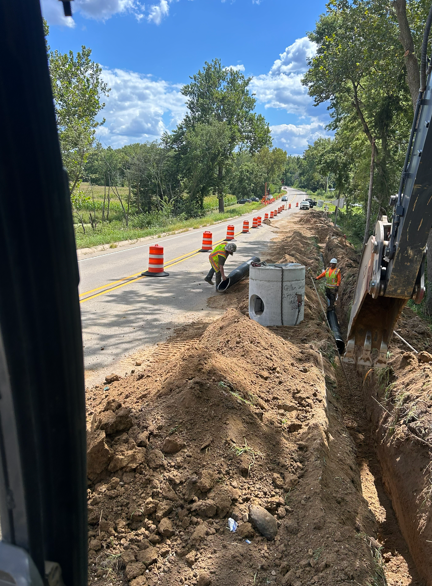
How a Drainage System Redirects Runoff
After site grading establishes the flow pattern, we install catch basins at low points where water naturally collects. In the Illinois Valley, we connect these basins with drainage pipe that runs to a storm sewer main or detention pond. The pipe is bedded and backfilled to prevent shifting, and each joint is sealed to keep soil and debris from entering the system.
Once the system is complete, rainwater flows into the inlets instead of pooling on pavement or eroding landscaped areas. Catch basins include grates that filter out leaves and large debris, while the underground pipe carries the runoff away at a controlled rate. You will see faster drainage during storms and less standing water after the rain stops.
Some projects require additional features such as detention basins or energy dissipation structures to slow down discharge rates and prevent downstream flooding. We install these components according to the engineered plans and verify that the system meets local stormwater ordinances. The work does not include routine cleaning of existing systems or repair of erosion damage outside the project limits.
Answers to Help You Plan the Work
People usually ask about drainage systems when they notice flooding or when a new development requires stormwater management. These answers cover the practical details that affect project planning and site performance.
Gillan Construction LLC builds storm drain systems in the Illinois Valley that handle runoff according to engineered plans and local regulations. If your site needs better water management or you are preparing for development approval, call (815) 559-2088 to discuss your drainage requirements and site conditions.
