Foundations Engineered to Carry Your Structure
Building foundation construction and structural concrete work for commercial projects in the Illinois Valley and surrounding areas.
Every commercial building in the Illinois Valley stands on a foundation designed to transfer the weight of walls, roofs, and equipment into stable soil without settling or shifting. Gillan Construction LLC constructs footings, foundation walls, and load-bearing concrete systems that match your structural drawings and support the forces your building generates over decades of use.
This service includes excavation for footings, placement of reinforcement, forming and pouring of foundation walls, and construction of grade beams or stem walls as specified by your engineer. Materials are selected for strength and durability, and placement follows codes for cover, spacing, and consolidation. Each step is inspected before backfill or the next phase begins.
If your commercial project in the Illinois Valley requires a foundation system that meets structural and geotechnical requirements, reach out to Gillan Construction LLC to discuss your foundation plans.
What Goes Into a Load-Bearing Foundation
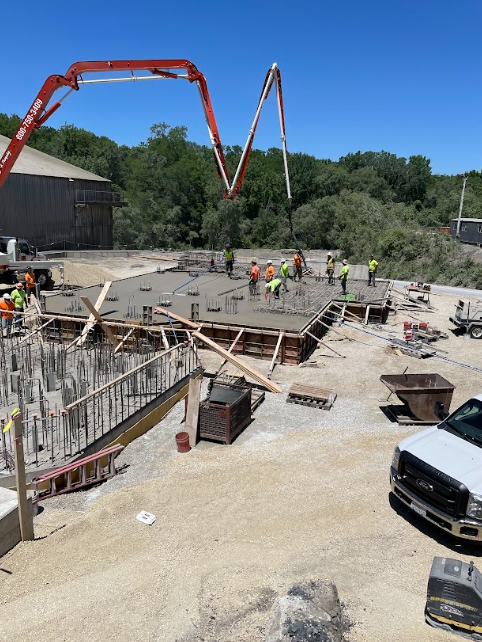
Foundation construction in the Illinois Valley starts with excavation to the depth your geotechnical report specifies, followed by forming and rebar placement in footings that distribute building loads across a wider area. Concrete is poured and vibrated to eliminate air pockets, then cured to develop design strength. Foundation walls are formed, reinforced, and poured in lifts if height requires it.
Once the foundation is complete, you see concrete footings and walls that sit level, meet thickness and reinforcement requirements, and show no honeycomb or voids. Anchor bolts are positioned for sill plates, and key slots or dowels are placed for future slabs. The foundation resists lateral soil pressure, supports vertical loads, and provides a stable base for framing.
Gillan Construction LLC uses commercial-grade concrete mixes and follows placement procedures that meet ACI standards. The service does not include waterproofing membranes or drainage systems, which are separate scopes. Backfill is placed in compacted lifts after walls cure, and formwork is stripped only when concrete reaches stripping strength.
Questions About Foundation Work Before You Build
Foundation construction involves soil conditions, engineering specifications, and coordination with inspectors, so clients often ask about depth, reinforcement, and timing relative to other trades.
Backfilling too early can crack or deflect foundation walls before the concrete gains enough strength to resist soil pressure. Curing time is typically three to seven days depending on weather conditions in the Illinois Valley.
Gillan Construction LLC builds foundations using engineered concrete systems and construction methods that meet structural specifications and last for the life of your building. If your project in the Illinois Valley needs footings, foundation walls, or load-bearing concrete work, get in touch to review your drawings and schedule.
