Uncover Utilities Without Damaging Them
Non-destructive excavation using pressurized water in the Illinois Valley and nearby counties
When you need to expose underground utilities, install new lines near existing infrastructure, or work in areas where mechanical digging could sever a gas line or fiber optic cable, you need a method that removes soil without cutting through what is buried beneath it. In the Illinois Valley, older utility maps are often inaccurate, and hand digging is too slow for commercial timelines.
Gillan Construction LLC provides hydro-excavation services that use pressurized water to break up soil and a vacuum system to remove the slurry, leaving buried utilities exposed and undamaged. This method works in tight spaces, near building foundations, and in areas where traditional excavation equipment cannot operate safely. We handle potholing to verify utility locations, trenching for new line installation, and daylighting to expose pipes or cables for repair or inspection.
If your project in the Illinois Valley requires precise excavation near utilities, contact us to review your site and coordination needs.
How the Process Works and What It Exposes
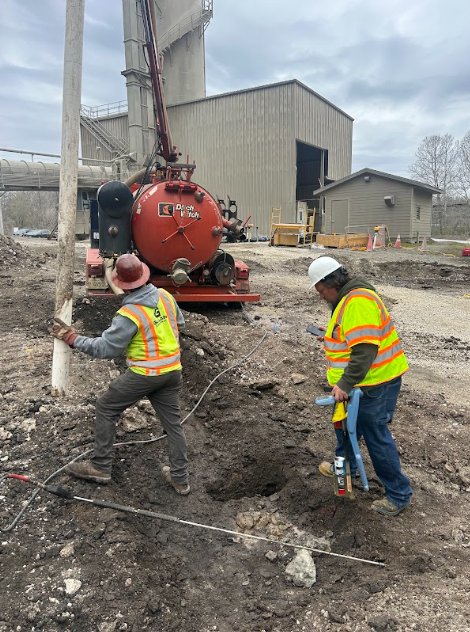
The hydro-excavation unit sprays pressurized water into the ground to break up soil while a high-powered vacuum lifts the resulting slurry into a debris tank. In the Illinois Valley, this method works in clay, sand, gravel, and frozen ground depending on water temperature and pressure settings. We adjust flow and pressure based on soil type and how close we are to the target utility.
Once the area is excavated, you will see the utility line clearly exposed without scratches, nicks, or punctures that mechanical digging often causes. The hole is clean-edged and sized precisely to the work area, reducing the amount of backfill needed and minimizing surface disruption. This method is commonly used for locating unmarked lines, exposing valve boxes, and creating access points for directional boring.
Hydro-excavation is faster than hand digging and safer than using a backhoe in congested utility corridors. It does not replace full-scale trenching for open sites, but it is the preferred method when accuracy and safety are more important than speed. We do not backfill or restore pavement unless specified in the scope.
Details That Matter Before You Book
Hydro-excavation is used on projects where precision and risk reduction matter, so contractors and project managers typically ask about capabilities, timelines, and site requirements before scheduling.
We can excavate up to 60 feet deep depending on soil type, water pressure, and vacuum lift capacity. Most commercial and municipal projects in the Illinois Valley require depths between three and twelve feet.
Gillan Construction LLC provides hydro-excavation for commercial and municipal projects in the Illinois Valley where precision and safety are required. If you need utility exposure, potholing, or trenching in sensitive areas, get in touch to discuss your project scope and timeline.